We Offer Financing!
Sump Pump: Complete Homeowner’s Guide to Preventing Basement Flooding
A sump pump is a mechanical device installed in a pit called the sump basin at the lowest point of your basement or crawl space. Its job is simple: collect excess water before it becomes a problem and pump it safely away from your home. A sump pump prevents groundwater accumulation from flooding basements, protects stored belongings, and helps stop mold from taking root in damp spaces.
Central Ohio homes sit on clay-heavy glacial till that holds moisture close to the surface; groundwater tables in many Columbus neighborhoods hover just 4 to 8 feet below grade. Southwest Florida faces its own challenges: water tables often sit inches below the surface, and tropical downpours can dump several inches of rain in a single afternoon. In both regions, a functioning sump pump is not optional for most homes with below-grade living or storage space, especially for homeowners who need reliable installation, repair, maintenance, or replacement to avoid costly water damage. A single basement flood in Central Ohio typically costs between $5,000 and $15,000 in damage and mold remediation. Dor-Mar Heating, Air Conditioning & Plumbing installs, replaces, and services sump pumps as part of our plumbing and drainage system solutions in both service areas.
Inside the home, the pump sits in a sump pit at the floor’s lowest point, connected to a discharge line that carries water outside and away from the foundation wall. Below, you’ll find what a sump pump is, how it works, the main types, when a home needs one, code and component basics, common problems, maintenance timing, how to choose the right pump, and when professional installation makes more sense than DIY.
How a Sump Pump Works to Remove Excess Water
The system has six core components: a sump pit (basin), the pump itself, a float switch, a check valve, a discharge pipe, and a power source. Each serves a specific function in keeping water out of your basement.
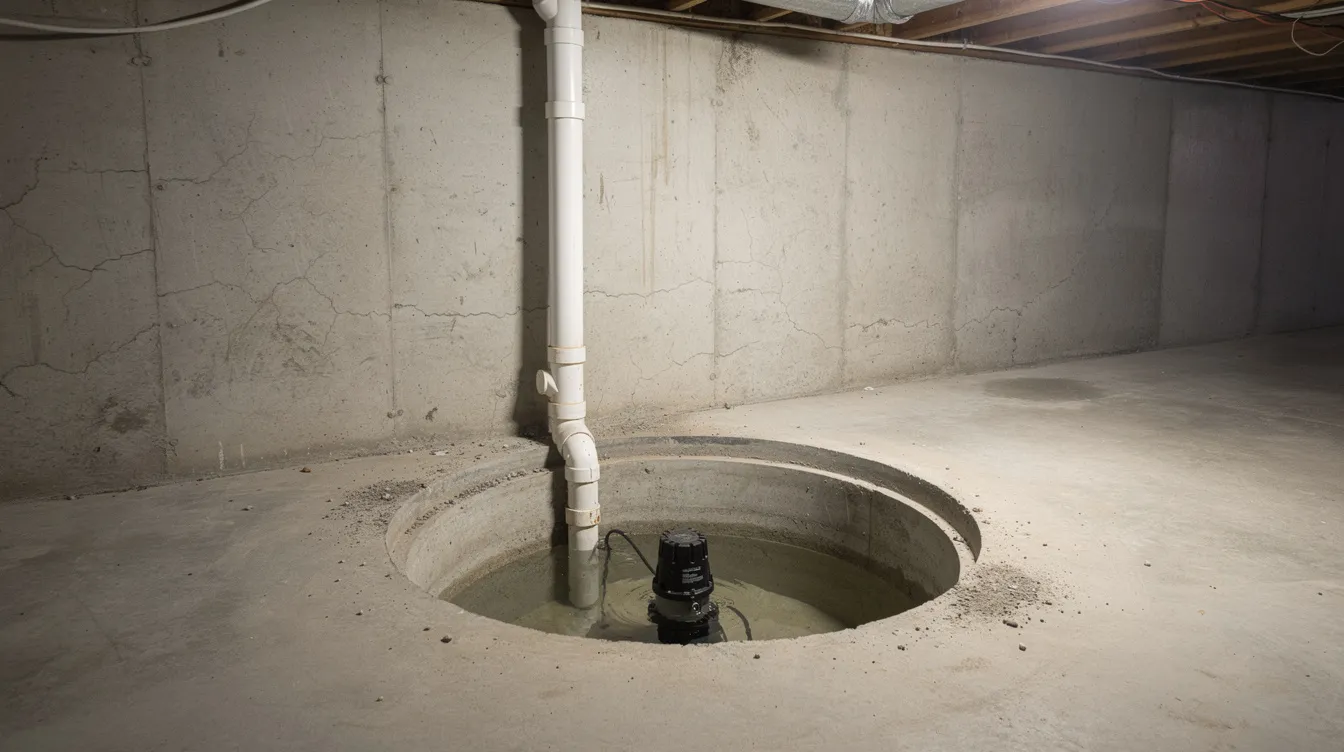
Here is the process, step by step. Groundwater or surface water flows toward the foundation through soil or interior drain tile and collects in the sump basin. A sump basin collects surrounding groundwater to prevent flooding this way. A float switch triggers the pump when water rises to a specific level inside the pit. The pump unit is equipped with an electric motor to push water out; the motor pushes the water up and out through the discharge pipe. The discharge pipe carries water away from the home’s foundation to a yard outlet, dry well, or storm drain.
A check valve in the discharge pipe keeps water from running back into the sump pit once the pump shuts off. Without it, every gallon in the vertical pipe would drain back down, forcing the pump to restart. A check valve prevents pumped water from flowing back into the basin, cutting unnecessary wear on both the motor and the float mechanism. This entire drainage system must be set up to meet local plumbing codes and route discharge water at least several feet from the foundation and neighboring properties.
Types of Sump Pumps
Not all sump pumps share the same design, and the type you choose will affect noise, maintenance access, durability, and cost. Three categories cover most residential installations.
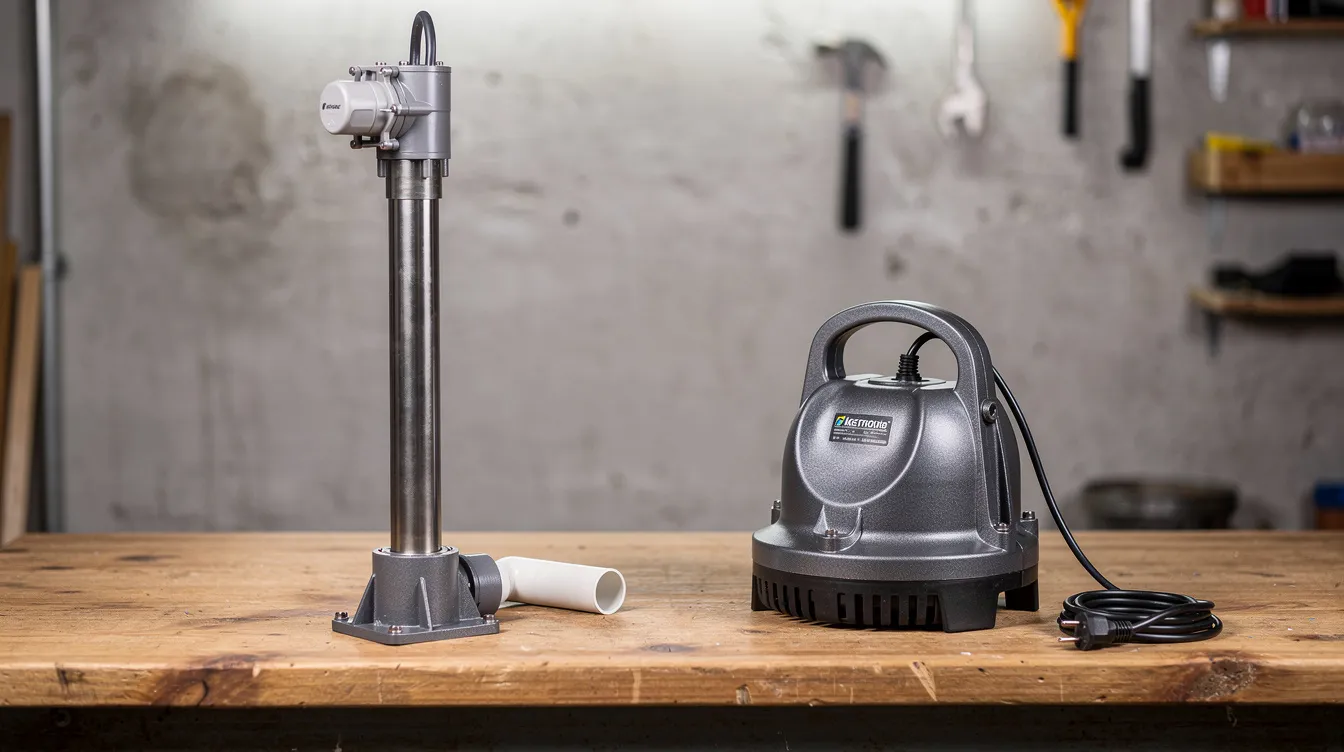
Pedestal sump pumps. Pedestal pumps feature a motor mounted above the pit and are easier to service because the motor stays accessible and dry. They cost less upfront (often $60 to $200 for the unit alone) but run louder since the motor sits in open air. They work well in small pits where a larger unit will not fit.
Submersible sump pumps. Submersible pumps sit underwater in the pit and are quieter than pedestal pumps because the water dampens motor noise. The sealed design handles higher vertical lift and greater flow, but the unit price can reach $600 or more for quality residential models. The pit must be large enough to hold the entire pump body.
Combination (primary + backup) systems. A primary pump paired with a backup provides a parallel layer of protection. Battery backup systems prevent flooding during power outages, which tend to happen during the same storms that cause flooding. Battery backup add-ons typically cost $600 to $1,200 installed in Central Ohio. Water-powered backup pumps use municipal water pressure through a venturi mechanism and require no electricity, but they consume large volumes of potable water and are permitted only as a secondary system under Ohio plumbing codes.
Sump Pump vs. Other Drainage System Solutions
A sump pump is one part of a broader moisture-control strategy. It works best when paired with passive drainage elements rather than used in isolation.
Interior French drains (perimeter drain tile) collect water at the base of the foundation and channel it into the sump pit. Exterior footing drains, waterproofing membranes, proper grading sloping away from the house, and gutter downspout extensions all reduce the volume of water reaching the foundation in the first place. The sump pump serves as the active mechanism that removes whatever water passive systems cannot handle.
Passive drainage alone (a French drain with no pump, for instance) can work in areas with sandy soil, low water tables, and moderate rainfall. Central Ohio’s clay soils drain slowly, and during spring storms the water table can rise above basement slab level, creating hydrostatic pressure that pushes water through floor cracks. In that scenario, gravity-fed drainage cannot keep up, and an active pump is required. In Southwest Florida, the water table often sits close to the surface year-round; even with good exterior grading, groundwater infiltration through slab edges demands a pump to maintain a dry crawl space or lower level. These are not situations where passive control alone will match the volume of incoming water.
When You Need a Sump Pump
Several warning signs point to the need for a sump pump or indicate that an existing one has failed:
- Recurring dampness on basement walls or floor
- Standing water after storms that takes hours or days to recede
- Visible water seepage through floor or wall cracks
- Musty odors suggesting mold growth that has gone undetected
- A documented history of flooding, even minor events
Rainwater or melting snow can cause groundwater to collect around foundations, and in areas with clay-heavy soils, that water has nowhere to go quickly. Many newer Central Ohio homes with finished basements include sump pits and pumps at construction. Older homes, especially those built before the 1980s, often lack them entirely, and preventing flooding during the spring thaw becomes difficult without one.
Lenders and insurance companies may require a sump pump in certain flood-prone neighborhoods or when a remodel adds finished living space below grade. Municipal codes in some jurisdictions also mandate sump installations during basement conversions.
Plumbing Codes, Discharge Rules, and Safety
Sump pump installations must comply with local plumbing codes and municipal regulations in both Ohio and Florida. These rules affect pit construction, discharge routing, materials, and electrical connections.
In most U.S. jurisdictions, discharging sump water into the sanitary sewer is prohibited. Connecting a sump pump to interior plumbing drains is a code violation that can lead to fines and void insurance claims. Florida’s 2020 Building Code, Chapter 33, requires sump pits to be at least 18 inches in diameter and 24 inches deep, with a full-flow check valve and code-rated piping materials such as PVC, copper, CPVC, or ductile iron. Building codes often require overflow drains for safety in plumbing fixtures like bathtubs, and overflow drains are required by plumbing codes in many regions; sump pump discharge systems follow a similar regulatory path to keep water managed properly.
Proper discharge practice means routing water to the yard, a storm drain (where allowed), or a dedicated drainage line. The outlet should slope away from the foundation and terminate at least 10 feet from the building. Electrical safety matters too: the pump outlet must be GFCI-protected, on a dedicated circuit, and never fed by an extension cord. Dor-Mar’s licensed plumbers handle permitting and ensure code-compliant installations for Central Ohio customers.
Key Sump Pump Components and Options
Understanding the parts of a sump pump system helps you make informed decisions about what to buy, what to maintain, and what to upgrade.
Sump pit (basin). Constructed from plastic (polyethylene), fiberglass, concrete, or steel. Minimum dimensions in Florida code: 18 inches diameter, 24 inches deep. A larger sump basin reduces wear due to longer pump cycles and fewer starts, because the pump does not short-cycle as frequently.
Pump motor. Common residential sump pumps are around 1/3 to 1/2 HP. Flow capacity is measured in gallons per hour (GPH) at a given head height. A 1/3 HP pump typically handles around 2,000 GPH at 5 to 10 feet of vertical lift.
Float switch. Available in tethered, vertical, and electronic (solid-state) form. Tethered floats can snag inside small pits; vertical or electronic switches are more reliable in tight spaces.
Check valve. Brass or PVC full-flow types are most common. Check valve installation prevents unnecessary cycling of the pump and protects the motor from premature burnout.
Discharge pipe. Typically 1.25 to 1.5 inches in diameter. PVC pipe was widely used for plumbing since the 1940s and remains the standard for sump discharge lines. ABS pipe is also used in some regions. In the broader plumbing world, lead pipes were banned in the US in 1986, copper piping became common in homes after 1960, and PEX is used in 60% of single-family homes today; for sump discharge, PVC or ABS remain the standard.
Add-on options. Water leak sensors notify homeowners immediately when leaks occur; Wi-Fi-connected alarms can send alerts to a phone if the pump fails or water rises above the open top of the pit. Sealed covers reduce odors and improve safety for children and pets. Inspect the cover gasket or other rubber seals for any crack that could let odors escape or reduce the cover’s effectiveness. Battery backup systems add a stopper against power-outage flooding. Dor-Mar can integrate smart water monitoring and humidity control to detect problems before damage occurs.
Most bathtubs include overflow drains as standard features to prevent water from spilling over. Overflow drains connect to a vertical pipe behind the tub and rely on gravity to function. A sump pump system applies a parallel principle: collect water in a covered basin, detect rising levels, and move the water out before it causes problems.
Common Sump Pump Problems and Troubleshooting
Pump failures tend to happen during storms, precisely when the equipment is needed most. A system that has not been checked in months may reveal issues only when basements start taking on water.
Frequent problems include:
- Pump not turning on: Power loss, a tripped GFCI outlet, or a stuck float switch. Check that the plug is secure and the breaker has not tripped.
- Short-cycling: The pump turns on and off rapidly. Common causes: a pit that is too small, a clogged intake, or a misadjusted float.
- Constant running: The pump cannot keep up with inflow, or a failed check valve lets water flow back after each cycle.
- Frozen or blocked discharge line: In Ohio winters, water sitting in a low spot of the discharge line can freeze and block the entire path. Preventing frozen pipes applies to discharge lines too.
- Tripped breakers: The motor may be drawing excessive current due to a seized impeller or electrical issues.
Simple checks you can do: verify the power source, manually lift the float to see if the pump activates, pour a bucket of water into the pit to test the cycle, and inspect the discharge outlet outside during a test run. Listen for grinding or unusual sounds that suggest a worn moving part.
Problems involving electrical odors, repeated breaker trips, rewiring, pit relocation, or drainage redesign require a licensed plumber or electrician. Dor-Mar offers emergency plumbing services with 24/7 availability for flooding or failed sump pump calls in Central Ohio, including communities like Baltimore, Ohio HVAC and plumbing services.
Maintenance and Testing Schedule
Preventive maintenance costs a fraction of what flood cleanup runs. Sump pumps are mechanical equipment with a seal, an impeller, and electrical contacts that eventually wear out over time.
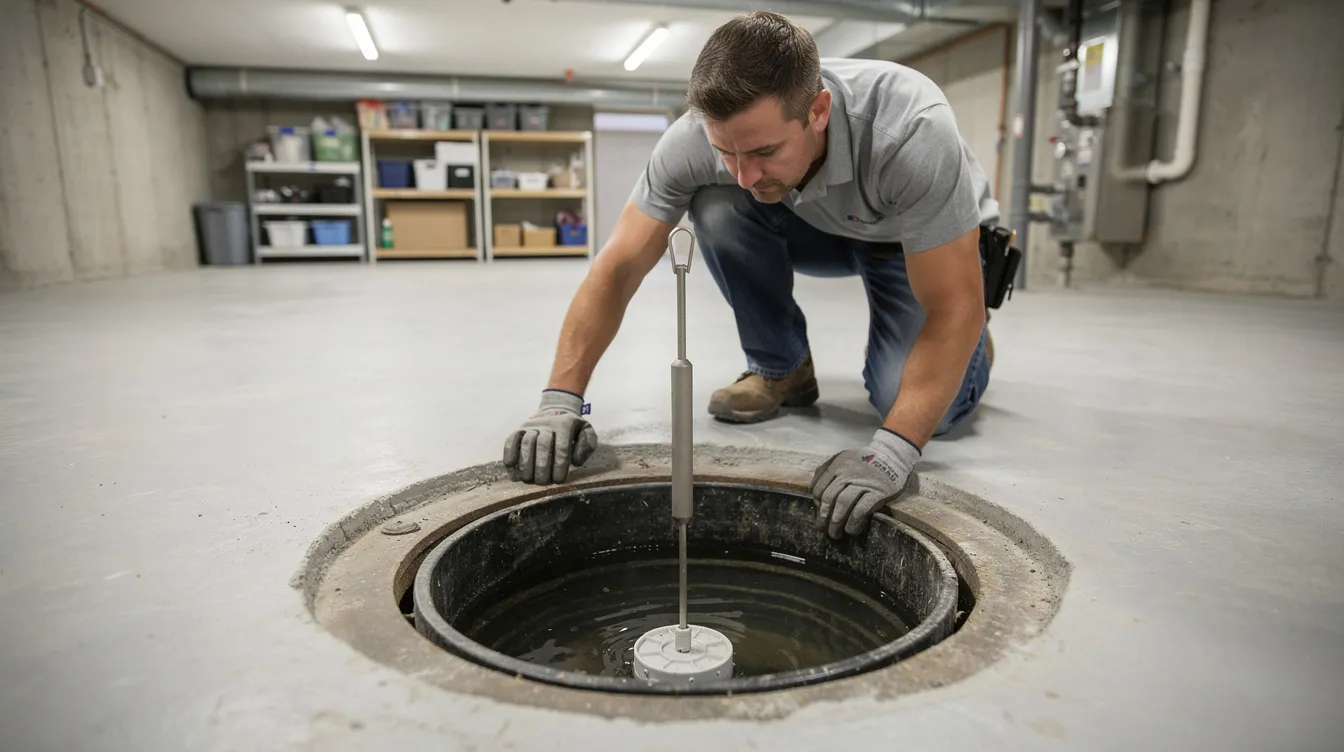
Monthly (during rainy season): Open the pit cover and remove debris. Pour a bucket of water in to confirm the float activates the pump. Check the discharge outlet outside for blockage or leaks. In winter, verify the line is not frozen.
Every 3 months: Fill the pit to its full capacity to test the complete cycle. If a battery backup is present, check the charge level and charger function. Test any alarm or sensor.
Annually: Schedule a professional inspection. A technician will measure the motor’s amp draw (rising amps indicate a motor nearing end of life), evaluate the check valve, inspect the discharge line for corrosion or cracks, and assess whether the system still matches your home’s water volume. Quality sump pumps last 5 to 10 years; in Central Ohio, pumps older than 7 years are often close to needing replacement.
Dor-Mar’s Home Comfort Membership bundles annual plumbing checks, including sump pump inspection, into a single plan and integrates with broader home comfort products and services. This keeps your cleaning and maintenance on a predictable schedule rather than a reaction to an emergency.
Choosing the Right Sump Pump for Your Home
The right pump depends on four factors: how much water enters your basement during heavy rain, how high the discharge pipe must lift that water (head height), whether your basement is finished or used for storage, and how long your area typically loses power during storms.
Sizing. A pump rated for 2,000 GPH at 10 feet of head suits most average-sized homes. If your discharge line runs 20 feet vertically or your basement takes on water from multiple sources, you may need a 1/2 HP or larger pump rated at 3,000+ GPH. The price of undersizing is a pump that cannot keep up; the cost of oversizing is a unit that cycles too frequently and burns out early.
Materials. Economy models use plastic housings and impellers. Professional-grade pumps use cast iron or stainless steel, which resist corrosion better and handle small debris without cracking. The price difference is typically 20 to 40%, but cast iron pumps often last 2 to 3 years longer in high-cycle environments.
Budgeting. In the Columbus area, a new sump pump installation (pit, pump, discharge line, sealed lid) starts around $1,800. Replacing an existing pump in a functioning pit runs $1,100 to $1,700 for a 1/3 HP unit. Weigh those figures against the $5,000 to $15,000 a single flood instance can cost in damage.
Contact Dor-Mar to schedule a free estimate for personalized sizing and system design in Central Ohio or Southwest Florida with our comprehensive plumbing services.
Professional Installation vs. DIY
Replacing a pump in an existing, properly sized basin with a working discharge line is a job some handy homeowners can handle. New installations and complex upgrades are a different matter.
A professional installation involves evaluating water entry points, sizing and locating the sump pit, cutting or drilling through concrete floor, installing the pump and discharge piping with the correct slope, and wiring a GFCI-protected dedicated circuit. Each step must match local code requirements.
Common DIY mistakes include:
- Undersized pit that causes short-cycling
- Discharge routed into the sanitary sewer or toward a neighbor’s property
- Missing check valve, leading to backflow and wasted pump cycles
- Using an indoor drain for discharge (a code violation)
- Sharing a circuit with other equipment, risking tripped breakers during storms
Dor-Mar brings decades of plumbing experience dating back to 1962, local code knowledge for both Ohio and Florida, warranty-backed work, and the ability to integrate sump systems with related services like radon mitigation, dehumidifiers, and indoor air quality improvements, all backed by our family-owned history and commitment to customer care. When the job is difficult or involves new concrete work, hiring a licensed plumber is the safer and more cost-effective path for homeowners in nearby communities such as Westerville HVAC and plumbing services and greater Westerville home comfort solutions.
Dor-Mar Services, Warranty, and Helpful Resources
Dor-Mar Heating, Air Conditioning & Plumbing is a family-operated home services provider offering sump pump installation, replacement, repair, and inspection across Central Ohio, along with comprehensive plumbing services and home comfort products and services. Our service offerings include emergency flood response, annual sump pump tune-ups, battery backup installation, and tying sump systems into broader drainage and plumbing solutions.
Manufacturer warranties on pumps typically run 5 years; installation warranties vary by product and service agreement, with some configurations covered for up to 10 years. Exact coverage depends on the specific pump model and terms agreed upon at the time of service.
For further reading beyond this article, FEMA’s flood guidance at fema.gov provides household flood preparedness checklists, and the ICC’s published Florida and Ohio code pages (external links referenced earlier) contain the full text of pit and discharge requirements. The page was last edited on these code sites to reflect 2020 and 2023 updates, making them current references. Manufacturer maintenance manuals, widely available on their respective websites, offer model-specific cleaning and testing instructions.
If your sump pump is older than 7 years, has not been tested recently, or if you have never had one installed, call or book online with Dor-Mar. We can assess your sump system alongside related home comfort needs like indoor air quality and dehumidification for damp basements. A 30-minute inspection now can prevent a long, expensive cleanup later.